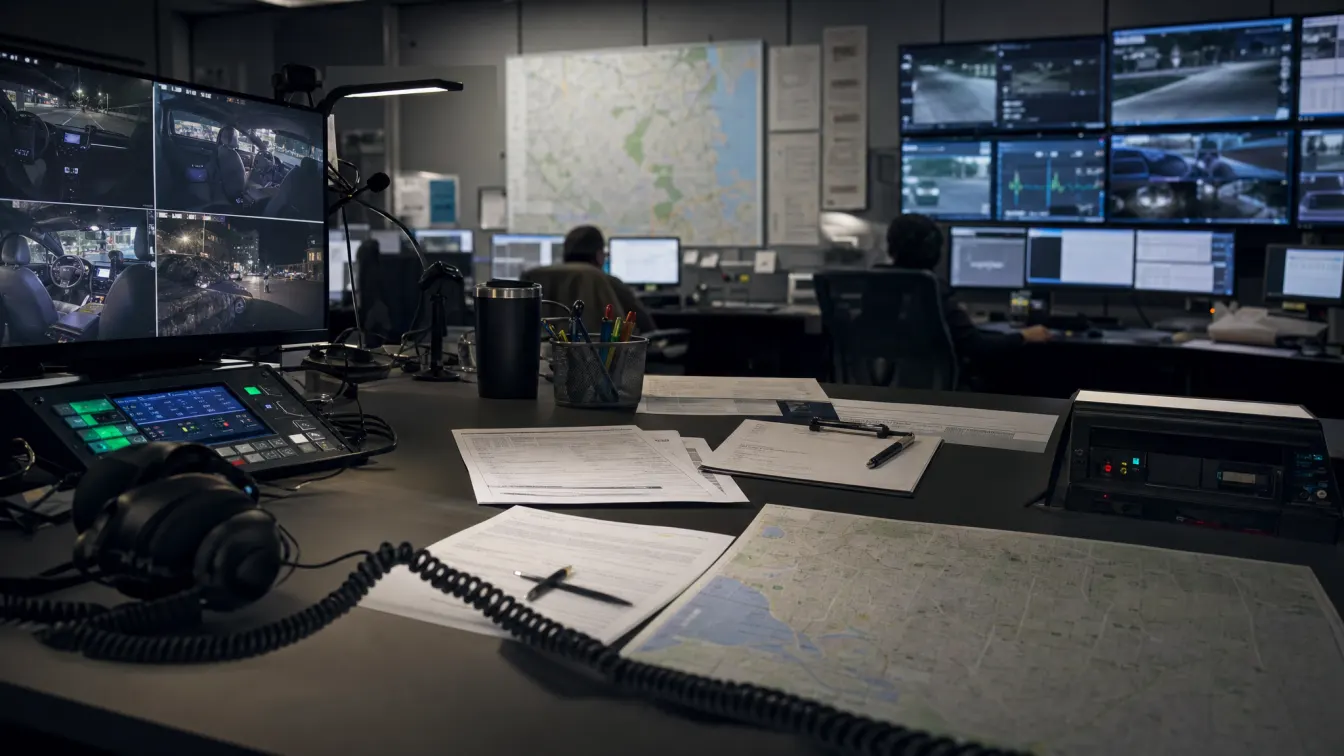
Waymo’s San Mateo incident makes the robotaxi legible as a reporting device. Two 15-year-olds allegedly drank alcohol and shot Orbeez from a Waymo on July 6. The company contacted police, stopped the car in a parking lot, and officers removed the teens. The funny headline is that the car snitched. The real mechanism is uglier and more useful: a private transport platform can observe a passenger compartment, classify an incident, alter the route, create a holding pattern, and hand the scene to armed state response.
The behavior sounds defensible in this case. Shooting water beads from a moving car is stupid. Drinking in a commercial ride is against the rules. Toy guns produce real fear once a passerby, a support operator, or a cop has to decide what they are seeing through partial information. Dumb teenage chaos does not erase the systems lesson. Waymo now operates a moving private room where safety, surveillance, customer support, routing, parental supervision, and law enforcement can collapse into one workflow.
The Los Angeles Times reported that San Mateo police detained the teens after the Waymo contacted the department and stopped until officers arrived. The police department’s own line, quoted by both the Times and 404 Media, was pure platform-era cop comedy: “Parents do you know where your teens are? Waymo does!” According to the same reports, officers determined the teens were using toy guns to shoot Orbeez out of the car. A Facebook video showed multiple officers and a police dog approaching the stopped vehicle with weapons raised.
That last detail matters. The robotaxi ended a ride and produced a scene. A support decision became a police call. A passenger compartment became an incident location. A toy-gun report became a weapons-up approach. Everyone can understand why Waymo wanted the behavior stopped. The harder question is what guardrails exist when a private mobility operator converts rider behavior into police contact, especially when the riders are minors.
Waymo’s own help pages describe the machinery without the tabloid garnish. Its camera and microphone page says autonomous vehicles carry cameras and microphones as the “eyes and ears” of the Waymo Driver. It says the company does not use facial recognition or biometric identification to identify people. It also says support may review video after an issue is brought to its attention, and “in more urgent circumstances” may access live video during a trip. Microphones inside the car are described as active only during rider-support calls or when riders enable them.
The Waymo Services Privacy Policy adds the account layer. Teen accounts can share live and historical trip details with the parent or guardian account, including trip location, route, date, time, charge, rating, incidents during trips, and safety or property information. The teen account page sells this as independence for ages 14 to 17 in Metro Phoenix with parental permission, 24/7 rider support, trip receipts, trip sharing, and a “safe, stranger-free space.” That phrase is doing a lot of work. The space has no stranger in the driver’s seat. It still has cameras, support intervention, parent visibility, account terms, and a company that can decide when the ride becomes an enforcement problem.
The Rider Rules prohibit drinking, drug use, weapons, smoking, vaping, touching driving controls, damaging the car, leaving messes, and letting minors ride alone without the right account structure. The Terms of Service go further: toy guns count under the weapons rule, passengers and guests must obey rider rules, Waymo can suspend access, and teen-account sections say local law may require Waymo to take actions including mandatory reporting to designated authorities. The system is coherent. That is exactly why it deserves scrutiny.
The most honest defense is simple: a human taxi driver would probably pull over and call the cops too. Fine. A human driver also sits inside the social field. They hear tone, see context, tell passengers to knock it off, decide whether to end the ride, and physically share the risk of any response. A driverless vehicle replaces that messy human discretion with sensors, remote support, policy, and software control. That can be calmer than a panicked driver. It can also be colder. The support operator sees a mediated slice. The passenger sees a screen, a stopped route, and then police.
That difference is why the “snitch car” meme is a good meme and a bad analysis. The car probably did not wake up with a badge fetish and dial the cops. A company workflow acted through the car. The weirdness comes from the fact that the workflow has wheels. It can move you, stop you, document you, contact your parent, preserve evidence, charge fees, suspend your account, and call police from inside the same transaction.
Waymo’s safety data complicates the critique in a useful way. Its Safety Impact dashboard says that through March 2026 the service had driven 220.6 million rider-only miles, including 67.078 million in the San Francisco Bay Area and 51.816 million in Los Angeles. It reports 94 percent fewer serious-injury-or-worse crashes than human benchmarks across operating cities, plus 82 percent fewer injury-causing crashes and 82 percent fewer airbag-deployment crashes. Those numbers are the serious version of the robotaxi argument. If autonomous fleets reduce road deaths, the public has a reason to tolerate new operational weirdness.
But crash reduction does not settle cabin governance. A safer vehicle can still be a worse private space. A safer vehicle can still normalize live cabin review. A safer vehicle can still route youth discipline through corporate policy and police contact. The dashboard measures crashes, airbag deployments, injuries, and miles. It does not measure how often support reviews video, how often trips are remotely stopped for behavior, how often police are contacted, how often false positives happen, how often riders are told the true reason for a stop, or what appeal path exists after an incident label hits an account.
Those missing numbers are now public-interest transportation metrics. Robotaxis are public street actors, private vehicles, data sensors, paid services, and potential police informants. Regulators already demand crash reporting. They should also demand incident-governance reporting: remote stops by category, law-enforcement contacts, minor-involved escalations, live-video access counts, retention windows, rider notifications, false-positive reviews, account sanctions, and emergency exceptions. If the fleet wants public trust, it can publish more than crash charts and glossy safety copy.
The cultural part is already here. People are learning that a driverless taxi gives them solitude without the old privacy bargain. No driver means no human stranger listening from the front seat. It also means the company owns the perception layer. The vehicle is a room, a product, a camera platform, an account endpoint, a liability container, and a sensor node operating on public streets.
That should make everyone less lazy about the word “autonomous.” The car drives itself. The governance does not. A remote team, a policy stack, a privacy policy, a teen-account model, a city police department, and a terms-of-service document all ride along. The driver left. The institution stayed in the car.