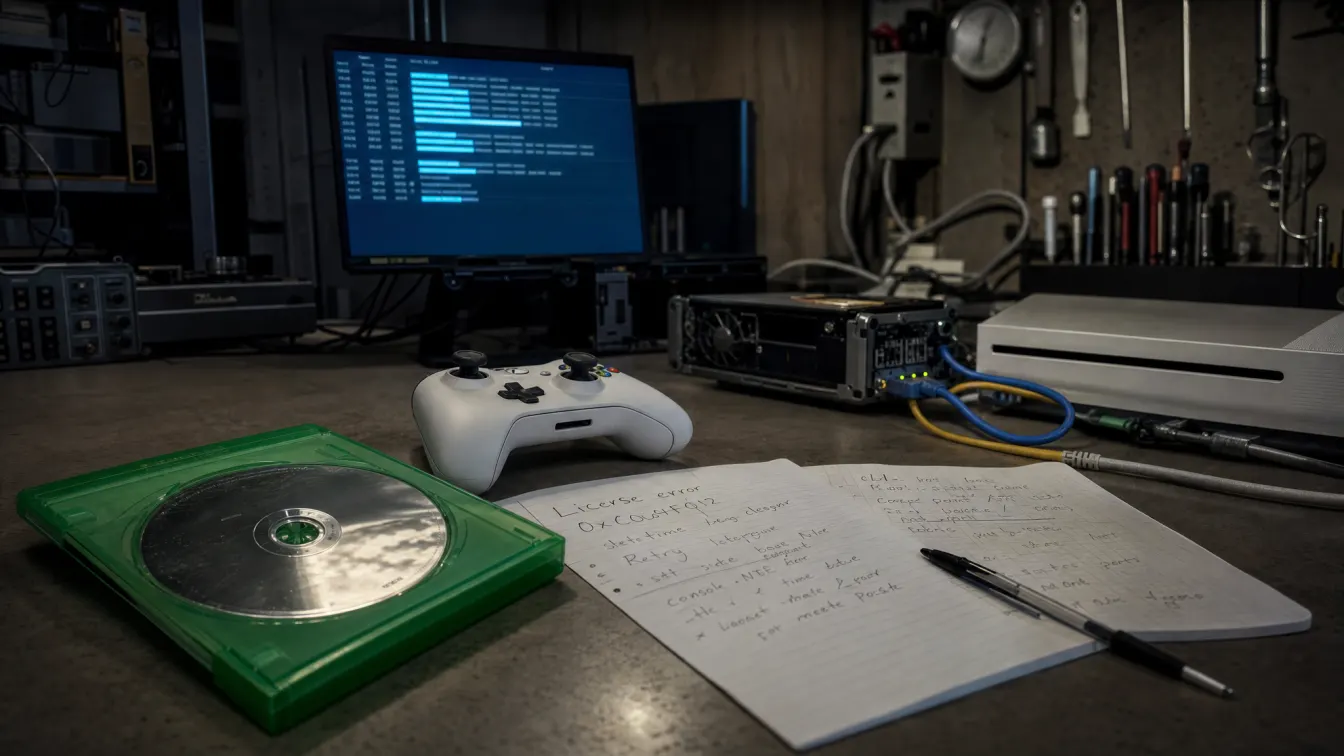
The old console bargain sounded simple enough to survive lawyers, storefront pivots, and subscription math: buy the disc, keep the game. The Xbox outage this week made the bargain look weaker than the plastic it ships on.
According to The Verge, an extended Xbox outage began Sunday night, interfered with sign-in, app launch, store access, purchases, and game launch, then reached the part of the stack people still call physical. Xbox’s status page reportedly warned that users could have problems playing digital and disc games. Xbox Support later said the issue had been mitigated and that players should once again be able to launch games, sign in, and complete purchases.
The immediate incident was temporary. The architectural smell is permanent. A console no longer treats a retail disc as a sealed artifact from a local machine era. It treats the disc as one input into a wider admission decision: profile state, home-console assignment, entitlement lookup, update requirements, subscription claims, store metadata, fraud controls, network reachability, and platform policy.
That machinery can be reasonable. Games ship broken without day-one patches. Multiplayer titles need servers. Subscription libraries need revocation. Cross-buy needs account identity. A stolen account should not become a permanent vending machine. The problem arrives when the same machinery quietly absorbs the use case that physical media was supposed to protect: local play when the platform operator is having a bad day.
the license stack ate the shelf
The modern console is a storefront terminal, DRM appliance, update client, telemetry endpoint, parental-control surface, cloud-save peer, identity provider, media device, and subscription kiosk wearing an HDMI port. That pile changes the meaning of ownership. The box can read the disc and still decide the launch path needs a service that is currently on fire.
The Verge’s report gives the useful operator detail. Some digital games still launched. Game Pass-linked titles hit error code 0x87e107df, which indicates license verification failed. The harder part was the status warning around disc games. The distinction consumers care about, disc versus download, does not match the distinction the platform enforces, locally satisfiable proof versus remote-dependent proof.
physical media needs a failure budget
Platform defenders will reach for the boring caveats. Some discs carry incomplete games. Some titles are online-only by design. Some license checks prevent abuse. Fine. Caveats do not erase the user’s expectation that a disc gives the console a local fact strong enough to outlive a status-page incident.
The operational standard should be harsher. If a disc-based single-player game needs an online check after normal setup, the box should say so before purchase and again before install. If the game can run offline after activation, the console should preserve that route across outages, account-service degradation, store downtime, and subscription failures. If a disc only behaves as a launcher for a remote entitlement, the package should be labeled like one.
This is where preservation people, consumer-rights people, and boring SRE people meet. Preservation asks whether the software will run after the store dies. Consumer rights asks whether the buyer received the control implied by the sale. SRE asks which dependency owns the blast radius. All three questions point at the same missing artifact: a clear offline contract.
microsoft’s next disc feature raises the stakes
The timing is ugly. Tom Warren recently reported that Xbox is testing a feature that would grant users a digital copy of games they own on disc. That feature could be useful if it respects ownership. It could also turn the disc into an enrollment token for an account-bound license, then let the platform’s entitlement logic decide what the object means later.
That distinction matters because convenience features often rewrite rights through defaults. A digital copy tied to a disc sounds generous until the platform has to decide what happens when the account is banned, the region changes, the store delists the title, the publisher pulls metadata, the console is replaced, the license service flakes, or the authentication endpoint loses a Sunday night.
The console industry keeps selling continuity while increasing dependency. Boxes promise backward compatibility, cloud saves, subscriptions, family libraries, remote play, instant resume, and all the other upholstered conveniences of platform life. Each feature adds another place where ownership can be mediated. The disc remains visible because it is emotionally and legally legible. The control moved into the graph behind it.
Skip the nostalgia sermon about cartridges. The fix is an explicit contract. A console should expose which games have a locally satisfiable launch path, which games require online activation, which games require recurring service checks, and which parts of a disc-based title survive a network outage. Put it in the store. Put it on the box. Put it in parental controls and library filters. Put it in exportable account data for the preservation freaks doing the job publishers pretend to respect.
A disc should carry operational rights, not plastic vibes from 2007. If the platform wants physical media to remain credible, the license stack has to fail open for legitimate local play, or the shelf is just merch with better packaging.