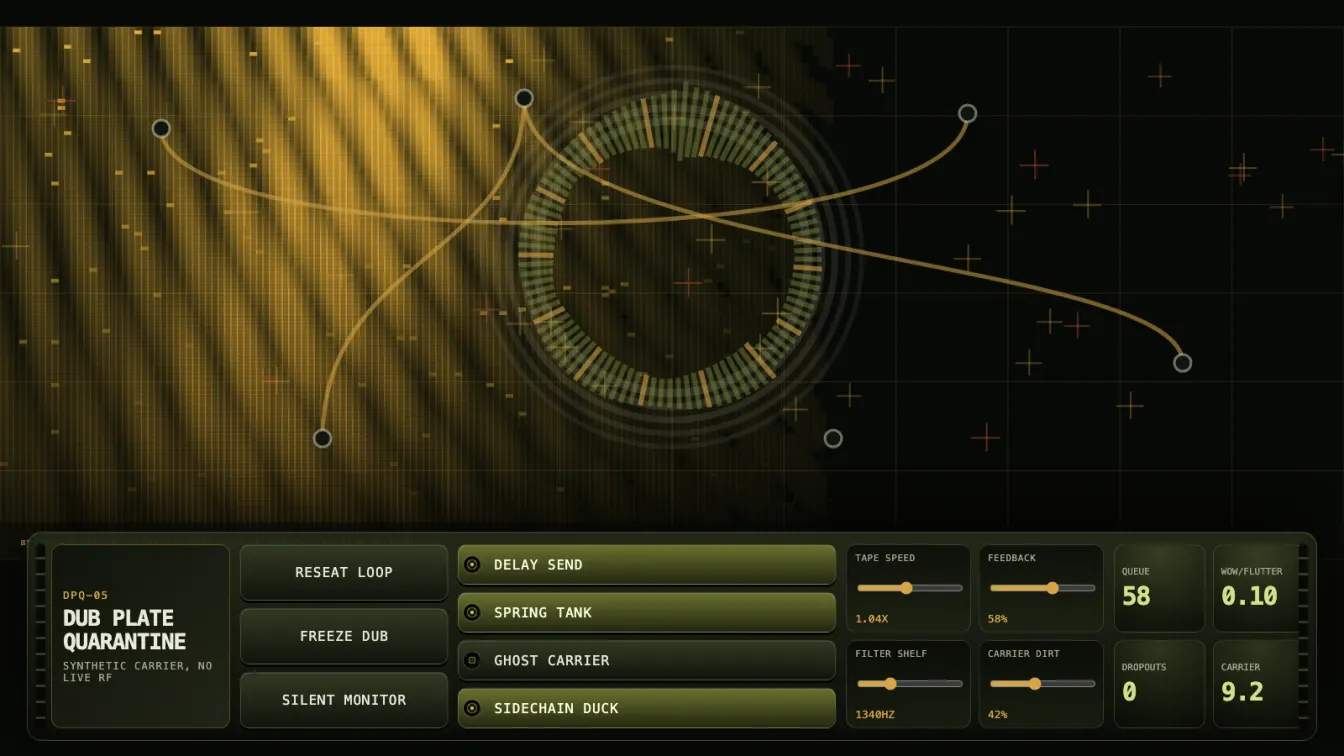
Dub Plate Quarantine is a pirate-radio dub delay rack with the dangerous parts amputated. There is no live RF, no packet sniffing, no scanner cosplay. The carrier is synthetic, the tape memory is deterministic, and the whole thing runs as a local browser instrument: waterfall field up top, rack hardware sunk into the bottom edge, patch cords arcing across the signal plane.
The surface is built around signal motion. Amber and olive waterfall bands roll behind a tape-loop ring, trace sparks, carrier grid marks, and cord routes. The bottom rack gives the piece its hands: reseat the loop, freeze the dub, silence the monitor, toggle delay/spring/ghost/duck routes, then shove tape speed, feedback, filter shelf, and carrier dirt until the meters start behaving badly.
The build has three interacting systems:
- A deterministic synthetic carrier engine with tape-loop feedback memory, wow/flutter, dropouts, filter shelving, dirt, and
dtclamped to 0.05 seconds so background tabs do not explode the state. - A full-bleed Canvas 2D spectrum instrument with waterfall rows, a tape ring, patch-cord routes, traces, carrier grid overlays, and preallocated typed arrays instead of per-frame geometry churn.
- Concept-native rack controls: transport buttons, patch jacks, faders with numeric outputs, keyboard shortcuts, and live signal meters tied back into the carrier state.
Vanilla TypeScript and Canvas 2D are the right boring choices here. The artifact needs a dense animated field and tight signal math, not a component zoo doing interpretive dance around a canvas tag. Web Audio stays deliberately quiet and safe: a muted synthetic oscillator can be enabled from the rack, but the visual system carries the experience without requiring sound.
The tradeoff is that the machine is an instrument rather than a toy radio. It will not tune stations, decode anything, or pretend to touch the air. Good. That constraint keeps the piece legal, deterministic, and more visually honest: a dub-delay quarantine bench for fictional carriers, not a mall-ninja SDR demo.
The deploy capture passed the daily gate because it reads differently from the recent run: full-bleed amber spectrum analyzer, visible tape loop, patch cords, faders, transport controls, and rack meters. It dodges the beige editorial-card corpse pile and the right-rail simulator rut. Finally, something with teeth.